_v1.2.avif)
Echo Financial Advisors is an independent, commission-free investment advice firm based in Auckland, New Zealand. Echo exists to help clients make better long-term investment decisions through clear scope, structured analysis, and disciplined advice.
Investment advice only. No mortgage or insurance advice.
Echo is built around focused investment advice, transparent scope, and deliberate next steps. The aim is to help clients understand what they own, what matters, and which decision should come next.
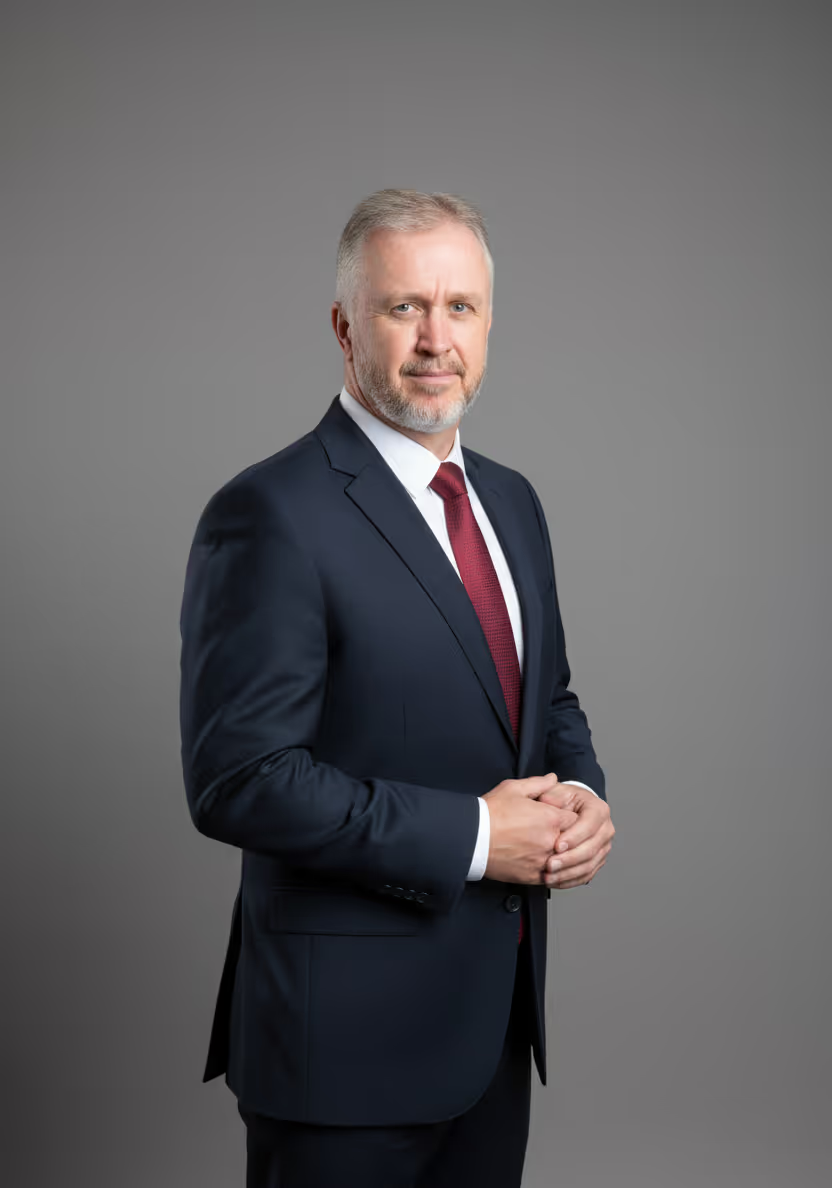
Kevin is the founder and adviser behind Echo Financial Advisors. His role is to help clients slow down the decision, identify the real issue, and make investment choices with clearer reasoning and appropriate scope.
Echo combines human judgment, structured analysis, and a selective advice process. The firm is intentionally focused on investments, rather than trying to be a generalist financial advice provider.
Founder and Principal Adviser of Echo Financial Advisors
Investment-focused financial advice firm
New Zealand Certificate in Financial Services Level 5 — Investment Strand
Independent, commission-free advice model
Based in Auckland, New Zealand
Success can create complexity. Portfolios grow in different places, employer shares accumulate, KiwiSaver settings drift, and retirement decisions move closer. Echo exists to help clients bring discipline to those moments before the next major decision is made.
Investment decisions often become harder when wealth, complexity, and responsibility increase.
Without a clear framework, decisions can become reactive, delayed, overconfident, or driven by product noise.
Echo helps identify the issue, test the portfolio, explain the trade-offs, and define the next appropriate step.
Echo’s advice process is built around scope, evidence, reasoning, and long-term suitability. The firm does not begin with products. It begins with the decision that needs to be made.
Before recommending action, Echo identifies what problem is actually being solved.
Clear scope protects the client, the advice process, and the quality of the recommendation.
Good advice should make risks, options, and consequences easier to understand.
Investment decisions should be judged against the client’s time horizon, objectives, and capacity for risk.
Echo is independent and commission-free. The advice process is not built around product incentives or provider commissions.
Echo does not receive commissions for recommending investment products.
Echo is deliberately focused on investment advice rather than trying to advise across every financial product category.
Echo does not seek to work with every enquiry. Fit, scope, and value must be clear.
Echo is being built as a selective investment advice firm with clear systems, controlled scope, and a long-term commitment to better decision-making. The firm’s size does not mean an informal process. It means direct adviser accountability, disciplined standards, and fewer clients served more deliberately.
The aim is not to serve the most people. The aim is to serve the right clients properly.
Echo will confirm whether your situation is within scope, whether a diagnostic is appropriate, and which starting point makes the most sense.
%20copy.avif)